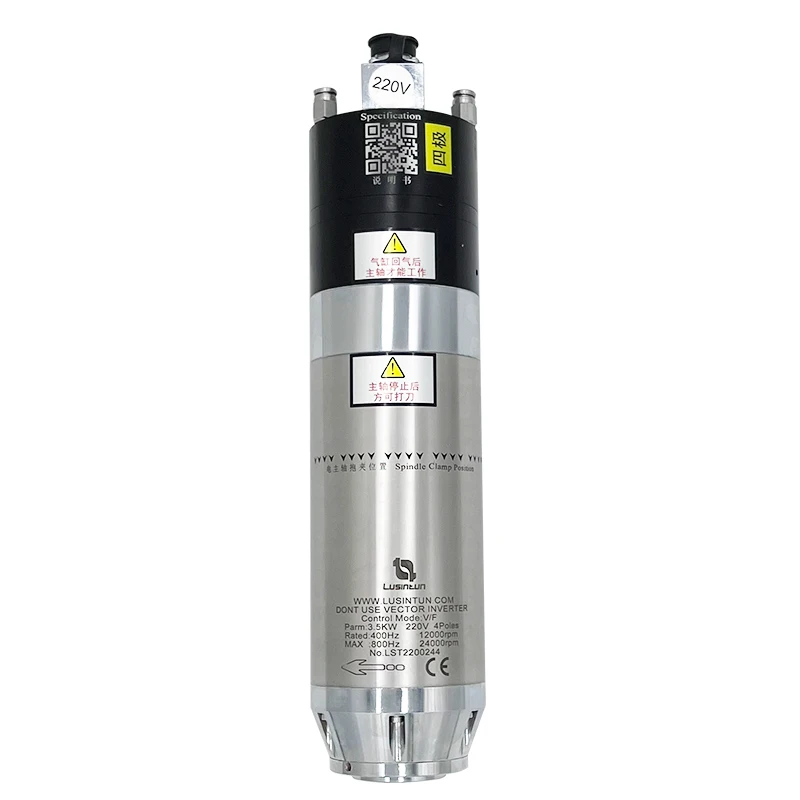
ER11 vs ER16 vs ER20 Collets: Size and Bit Shank Guide
ER collets are the difference between a router and a CNC spindle. They're precision ground, interchangeable, and dramatically more true than the collets that come on trim routers. But which size do you need, and what's the cost of going too small or too large?
Table of Contents
- ER11: The Smallest
- ER16: The Middle Option
- ER20: The Production Standard
- Runout: The Silent Quality Killer
- Bit Shank Size Reference Table
- Collet Quality and Longevity
- Collet Cleaning and Maintenance
- Choosing Your Collet Size by Spindle
- Quick Conversion: Shank Size Equivalents
- Matched Spindle/Collet Recommendation
- What We'd Buy
- Shop This Guide
- Related Articles
ER11: The Smallest
ER11 collets hold up to 7mm shank diameter. In practical terms:
- 1/8" shank bits (3.175mm) — plenty of room
- Small engraving bits (2mm, 3mm)
- Tiny cutters for PCB work
Which spindles use ER11:
- 500–800W spindles (small machines, 3D printer spindles)
- Some trim router adapters
Drawback: The limiting factor for most hobby work. You can't use 1/4" end mills, which are the standard for wood and soft plastic cutting. 1/4" shanks are 6.35mm, and while they technically fit (just barely), the collet can slip.
Runout tolerance: Cheap ER11 collets can have 0.05mm+ TIR (total indicated runout). At 24,000 RPM, this vibration is noticeable as chatter.
Use ER11 for: Engraving, PCB drilling, 3D printer spindle mounts, laser cutter optics head. Not for production CNC work.
ER16: The Middle Option
ER16 collets hold up to 10mm shank diameter. In practical terms:
- 1/4" shank bits (6.35mm) — comfortable fit
- 3/8" shank bits (9.525mm) — tight but acceptable
- Small carbide end mills (2mm, 3mm, 4mm)
Which spindles use ER16:
- Mid-tier spindles (1.0–1.5kW)
- Aftermarket upgrades for 800W spindles
Advantage: Opens up 1/4" shank bits, which are the standard for small CNC work. Cheaper than ER20 spindles.
Drawback: Can't hold 1/2" shank bits (12.7mm). You're limited to 1/4" and smaller, which are less rigid under load.
Runout tolerance: Good quality ER16 collets run 0.01mm TIR. Cheap ones drift toward 0.05mm.
Use ER16 for: Hobby routers under 600mm, wood and soft plastic cutting, light aluminum work. Most MPCNC builds use ER16.
ER20: The Production Standard
ER20 collets hold up to 13mm shank diameter. In practical terms:
- 1/4" shank bits (6.35mm) — loose fit, not recommended
- 3/8" shank bits (9.525mm) — comfortable fit
- 1/2" shank bits (12.7mm) — primary use, perfect fit
Which spindles use ER20:
- Large spindles (1.5kW, 2.2kW+)
- Premium 1.5kW spindles
Advantage: 1/2" shank bits are the real upgrade. These are:
- More rigid (less deflection under load)
- Faster (more flute area for chip evacuation)
- More available (1/2" is the professional standard)
- Better for aluminum and dense materials
A 1/2" shank 3-flute end mill outperforms a 1/4" shank 2-flute equivalent dramatically.
Drawback: Spindle weight increases. Cost increases. Your Z-axis needs to be strong enough.
Runout tolerance: Quality ER20 collets run 0.008–0.01mm TIR. This is the precision you want for aluminum.
Use ER20 for: Serious aluminum work, production routers, large machines, any build where chatter is a limiting factor.
Runout: The Silent Quality Killer
Runout is measured with a dial indicator on the bit shank while the collet rotates. A sloppy collet (0.05mm runout) creates a wobbling bit that looks like the bit is broken. You get:
- Chatter marks on the surface (fine ripple pattern)
- Tool wear acceleration (vibration stresses the flutes)
- Deflection under load (the bit moves, cuts are oversized)
Budget collets: Often 0.03–0.05mm TIR. Adequate for soft materials, not great for aluminum.
Quality collets (Maritool, Schunk, even mid-tier Chinese): 0.008–0.015mm TIR. This is where chatter disappears.
Test before buying: Many sellers won't mention runout spec. Reviews that say "very true" or "no chatter" suggest good quality.
Bit Shank Size Reference Table
| Bit Type | Shank Diameter | ER11 | ER16 | ER20 | Notes |
|---|---|---|---|---|---|
| Engraving bit | 2mm | ✓ Loose | ✓ | ✓ | Tiny bit, all collets work |
| PCB drill | 3mm | ✓ | ✓ | ✓ | Standard for PCB |
| 1/8" shank | 3.175mm | ✓ | ✓ | ✓ | Less common |
| 1/4" shank | 6.35mm | ✗ (slip) | ✓ | ✓ | Industry standard small bit |
| 3/8" shank | 9.525mm | ✗ | ✓ Tight | ✓ | Large single-flute cutter |
| 1/2" shank | 12.7mm | ✗ | ✗ | ✓ | Industry standard large bit |
| Surfacing bit | 20mm+ | ✗ | ✗ | ✗ (need ER25+) | Requires larger collet |
Collet Quality and Longevity
A quality collet costs $3–8 each. A cheap collet costs $1–2. Over the lifetime of a spindle (5+ years), you might buy 10–20 collets (as backups or replacements). Total investment: $30–160.
Cheap collets have looser tolerances, may slip on larger shanks, and develop play after 100+ clamping cycles.
Quality collets (Maritool, Schunk, quality Chinese clones) maintain runout specs for thousands of clamping cycles. They're worth it.
Collet Cleaning and Maintenance
This is critical and often overlooked. A dirty collet taper causes runout problems:
- Before each bit change: Visually inspect the collet bore and taper for chips or dust
- Compressed air: Blow out the collet chamber and spindle taper
- Collet wrench: Don't over-tighten the collet nut. Snug (full contact) is enough. Over-tightening wears the threads
- Monthly: Disassemble the collet nut and clean the taper with a soft brush and shop cloth
- Quarterly: If you run heavy cutting, disassemble the collet assembly and clean thoroughly
A clean collet and taper maintain 0.01mm runout. A dirty one can drift to 0.05mm+ without you realizing it.
Choosing Your Collet Size by Spindle
If you have an 800W spindle (likely ER11 or ER16): Start with ER16 if the spindle supports it. 1/4" shank bits are standard. If you're stuck with ER11, you can still cut but you'll be limited to small bits.
If you're buying a 1.5kW spindle: Specify ER20 as a decision factor. The bit selection advantage is significant. Some sellers offer ER16 on 1.5kW spindles to save cost—avoid those.
If you're buying a 2.2kW spindle: Default is ER20. This is the right choice.
Quick Conversion: Shank Size Equivalents
- 1/8" = 3.175mm
- 1/4" = 6.35mm
- 3/8" = 9.525mm
- 1/2" = 12.7mm
- 5/8" = 15.875mm
- 3/4" = 19.05mm
Professional machinists work in 1/4" increments. That's why 1/4", 3/8", and 1/2" shanks are standard. Metric-named bits (1mm, 2mm, 3mm) are for tiny work (engraving, PCB).
Matched Spindle/Collet Recommendation
| Spindle Wattage | Recommended Collet | Primary Bit Type |
|---|---|---|
| 500–800W | ER11 | 1/8", 2–3mm |
| 1.0–1.5kW | ER16 | 1/4", 4–6mm |
| 1.5–2.2kW (standard) | ER20 | 1/4" and 1/2" |
| 2.2kW+ (serious work) | ER20 or ER25 | 1/2", surfacing bits |
What We'd Buy
For a hobby spindle you already have: Buy a matched ER collet set (usually 5–6 collets covering common sizes). Expect to pay $15–30 for quality collets. Cheap aliexpress 10-packs are tempting but often have runout issues.
When choosing a spindle: Pick the wattage you need first. Then check what collet it comes with. If it's ER16 and you want to cut aluminum seriously, find a 1.5kW with ER20 instead (usually a $30 difference from the seller).
Pro move: Buy a set of quality collets (Maritool, Schunk, or reputable Chinese) even if your spindle came with cheap ones. The runout improvement is immediate and noticeable.
Shop This Guide
| Item | Where | Link |
|---|---|---|
| ER11 Collet Set (precision) | Amazon | ER11 collet set precision on Amazon → |
| ER16 Collet Set (quality) | Amazon | ER16 collet set CNC on Amazon → |
| ER20 Collet Set (complete) | Amazon | ER20 collet set 1/2 inch on Amazon → |
| ER Collet Sets by Size | AliExpress | ER collet set precision CNC on AliExpress → |
| Collet Wrench Set | Amazon | ER Collet Wrench on Amazon → |
| 1/2" Shank End Mill Assortment | Amazon | 1/2 inch shank end mill set on Amazon → |