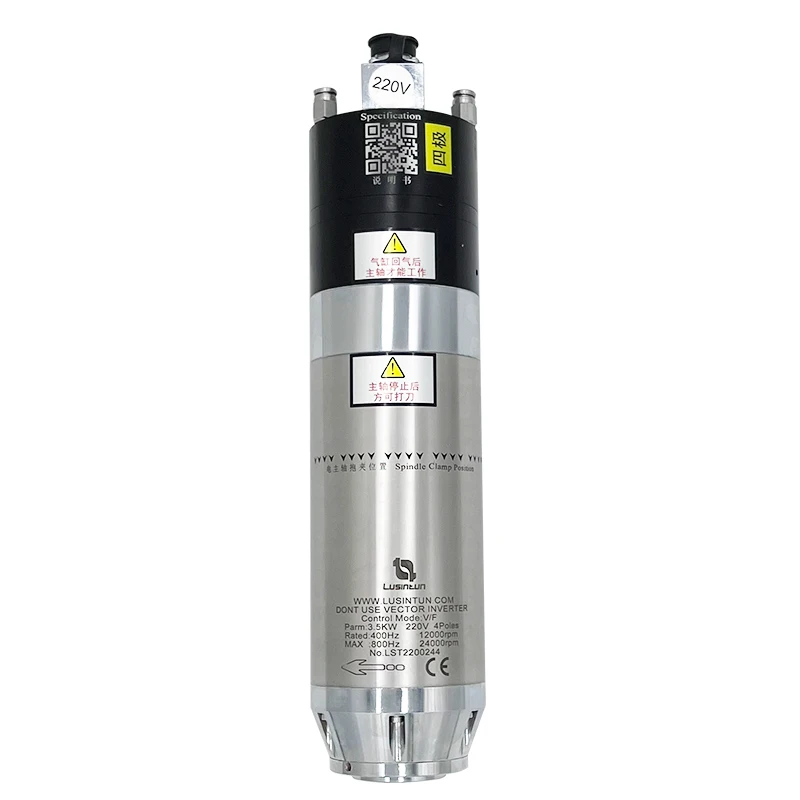
ER11 vs ER16 vs ER20 Collets: Size and Bit Shank Guide
ER collets are a common toolholding system on CNC spindles. They're interchangeable within the correct ER series, with separate collets for different shank sizes. Runout depends on the spindle, nut, collet and tool, so an ER label alone does not guarantee better accuracy than a trim router.
Table of Contents
- ER11: A Compact Option
- ER16: The Middle Option
- ER20: The Production Standard
- Runout: The Silent Quality Killer
- Bit Shank Size Reference Table
- Collet Quality and Longevity
- Collet Cleaning and Maintenance
- Choosing Your Collet Size by Spindle
- Quick Conversion: Shank Size Equivalents
- Matched Spindle/Collet Recommendation
- Parts for this guide
- Parts for this guide
- Related Articles
ER11: A Compact Option
ER11 collets hold up to 7mm shank diameter. In practical terms:
- 1/8" shank bits (3.175mm) — plenty of room
- Small engraving bits (2mm, 3mm)
- Tiny cutters for PCB work
Which spindles use ER11:
- 500–800W spindles (small machines, 3D printer spindles)
- Some trim router adapters
Drawback: ER11 limits the largest tool shank you can hold, but a correctly sized 1/4" ER11 collet securely holds a 6.35mm shank. Do not force that shank into a 6mm collet or clamp it in an oversized one.
Runout: Check the collet manufacturer's stated TIR and measure the assembled spindle, collet and tool. A low-cost collet has no universal runout value, and runout alone does not predict chatter.
Use ER11 for: Small milling cutters, engraving tools and PCB drills within the spindle's capacity. It can serve production work with small tools; laser optics are not its purpose.
ER16: The Middle Option
ER16 collets hold up to 10mm shank diameter. In practical terms:
- 1/4" shank bits (6.35mm) — comfortable fit
- 3/8" shank bits (9.525mm), with a matching collet
- Small carbide end mills (2mm, 3mm, 4mm)
Which spindles use ER16:
- Mid-tier spindles (1.0–1.5kW)
- Some compact spindles, if the spindle nose is designed for ER16
Advantage: Accepts larger shanks than standard ER11, including 3/8" with the right collet. Both ER11 and ER16 can hold 1/4" shanks.
Drawback: Standard ER16 cannot hold a 1/2" shank. It does accept 3/8" and common metric sizes above 1/4", using the matching collets.
Runout: Compare the specified collet grade and measurement distance. ER16 size alone does not establish a TIR value.
Use ER16 for: Wood, plastic and aluminum work with compatible small and medium shanks. On an MPCNC, choose collets for the actual router or spindle fitted.
ER20: The Production Standard
ER20 collets hold up to 13mm shank diameter. In practical terms:
- 1/4" shank bits (6.35mm), secure in a matching ER20 collet
- 3/8" shank bits (9.525mm) — comfortable fit
- 1/2" shank bits (12.7mm) — primary use, perfect fit
Which spindles use ER20:
- Large spindles (1.5kW, 2.2kW+)
- Premium 1.5kW spindles
Advantage: 1/2" shank bits are the real upgrade. These are:
- More rigid (less deflection under load)
- Can support larger cutting diameters, if spindle power and machine rigidity allow
- Available in larger router cutters and end mills
- Useful for larger cuts when the machine can handle the cutting forces
A larger shank can reduce deflection, but flute count, cutting diameter, stickout and chip evacuation determine whether a 1/2" tool improves the job.
Drawback: Spindle weight increases. Cost increases. Your Z-axis needs to be strong enough.
Runout: Choose a collet with a documented TIR specification and verify it in your spindle. ER20 does not inherently run truer than smaller ER sizes.
Use ER20 for: Jobs needing its larger shank capacity, especially 1/2" tooling. It does not by itself cure chatter or make a machine suitable for aluminum.
Runout: The Silent Quality Killer
Measure runout with a suitable indicator on a clean test pin or tool shank, turning the isolated spindle by hand. Excessive runout can cause:
- Chatter marks on the surface (fine ripple pattern)
- Tool wear acceleration (vibration stresses the flutes)
- Unequal flute loading and oversized cuts
Budget collets: Check the stated TIR and inspect them before use; price alone does not specify accuracy.
Quality collets: Look for a documented runout specification. Better toolholding can help finish, but chatter can also come from the machine or cutting parameters.
Before buying: Look for a numerical runout specification with test conditions and a return policy. Review phrases such as "very true" are not measurements.
Bit Shank Size Reference Table
| Bit Type | Shank Diameter | ER11 | ER16 | ER20 | Notes |
|---|---|---|---|---|---|
| Engraving bit | 2mm | Yes, with a 2mm collet | ✓ | ✓ | Use the matching 2mm collet in each series |
| PCB drill | 3mm | ✓ | ✓ | ✓ | Check the actual drill shank |
| 1/8" shank | 3.175mm | ✓ | ✓ | ✓ | Common on small CNC cutters |
| 1/4" shank | 6.35mm | Yes, with a 1/4" collet | ✓ | ✓ | Industry standard small bit |
| 3/8" shank | 9.525mm | ✗ | Yes, with a 3/8" collet | ✓ | Shank size does not specify flute count |
| 1/2" shank | 12.7mm | ✗ | ✗ | ✓ | Industry standard large bit |
| Surfacing bit | Check actual shank diameter | Depends on tool shank | Depends on tool shank | Depends on tool shank | Match shank capacity and the spindle's cutter limits |
Collet Quality and Longevity
Buy the individual collet sizes you use and replace damaged or worn collets. Branded precision collets can cost substantially more than generic sets, so check the actual model and specification.
Inspect collets for damage, poor fit and excessive runout; replace any that do not hold the tool reliably.
A documented runout specification and consistent fit are worth paying for. Service life depends on clamping, cleaning, loading and damage.
Collet Cleaning and Maintenance
This is critical and often overlooked. A dirty collet taper causes runout problems:
- Before each bit change: Visually inspect the collet bore and taper for chips or dust
- Compressed air: Blow out the collet chamber and spindle taper
- Collet wrench: Tighten to the specified torque for your nut type and clamping diameter, using the correct wrench. Finger-tight or merely snug is not a torque specification.
- At tool changes: Remove chips and clean the collet, nut and taper as needed.
- After contamination or a toolholding problem: Disassemble, inspect and clean the assembly before reuse.
A clean, undamaged collet and taper help preserve the assembly's accuracy. Check runout if finish changes; cleaning does not guarantee a particular TIR.
Choosing Your Collet Size by Spindle
If you have an 800W spindle: Identify its actual ER series and buy matching collets. ER11 can hold 1/4" shanks; an ER16 collet cannot replace ER11 in the same taper.
If you are buying a 1.5kW spindle: Choose ER20 if you need 1/2" shanks. ER16 remains useful for smaller tooling; compare the actual spindle specifications.
If you're buying a 2.2kW spindle: Default is ER20. This is the right choice.
Quick Conversion: Shank Size Equivalents
- 1/8" = 3.175mm
- 1/4" = 6.35mm
- 3/8" = 9.525mm
- 1/2" = 12.7mm
- 5/8" = 15.875mm
- 3/4" = 19.05mm
Both metric and inch shanks are common, including 6mm, 8mm, 10mm, 1/4", 3/8" and 1/2". Match the collet to the actual shank diameter; metric tooling is not limited to engraving.
Matched Spindle/Collet Recommendation
| Typical spindle (check yours) | Recommended Collet | Primary Bit Type |
|---|---|---|
| 500–800W | ER11 | 1/8", 1/4", small metric shanks |
| 1.0–1.5kW | ER16 | 1/4", 4–6mm |
| 1.5–2.2kW (standard) | ER20 | 1/4" and 1/2" |
| 2.2kW+ (serious work) | ER20 or ER25 | 1/2", surfacing bits |
Parts for this guide
If you are buying after reading this, these are the specs to look for.
| Part | What to buy | Where to look |
|---|---|---|
| ER11 1/4-inch collet Lets an ER11 spindle hold common 1/4-inch router bits. | ER11 with a 1/4-inch (6.35mm) gripping size for an ER11 spindle; do not substitute a 6mm collet. | |
| ER16 shank-size collets Covers the common inch shanks within ER16 capacity. | For an ER16 spindle, individual 1/4-inch and 3/8-inch collets, with a stated TIR specification and measurement distance. | |
| ER20 shank-size collets Provides correct grip for both small and large shanks in the same spindle. | For an ER20 spindle, individual 1/4-inch and 1/2-inch collets; buy exact gripping sizes, not one oversized collet. | |
| Runout measuring kit Checks actual assembled runout before replacing the spindle or an entire collet set. | Dial test indicator with 0.001mm graduations, rigid stand and a ground test pin matching the collet bore; rotate spindle by hand with power isolated. |
"Search" buttons open a search for that exact spec, so compare listings against it before buying. Some links earn us a commission at no extra cost to you (disclosure).