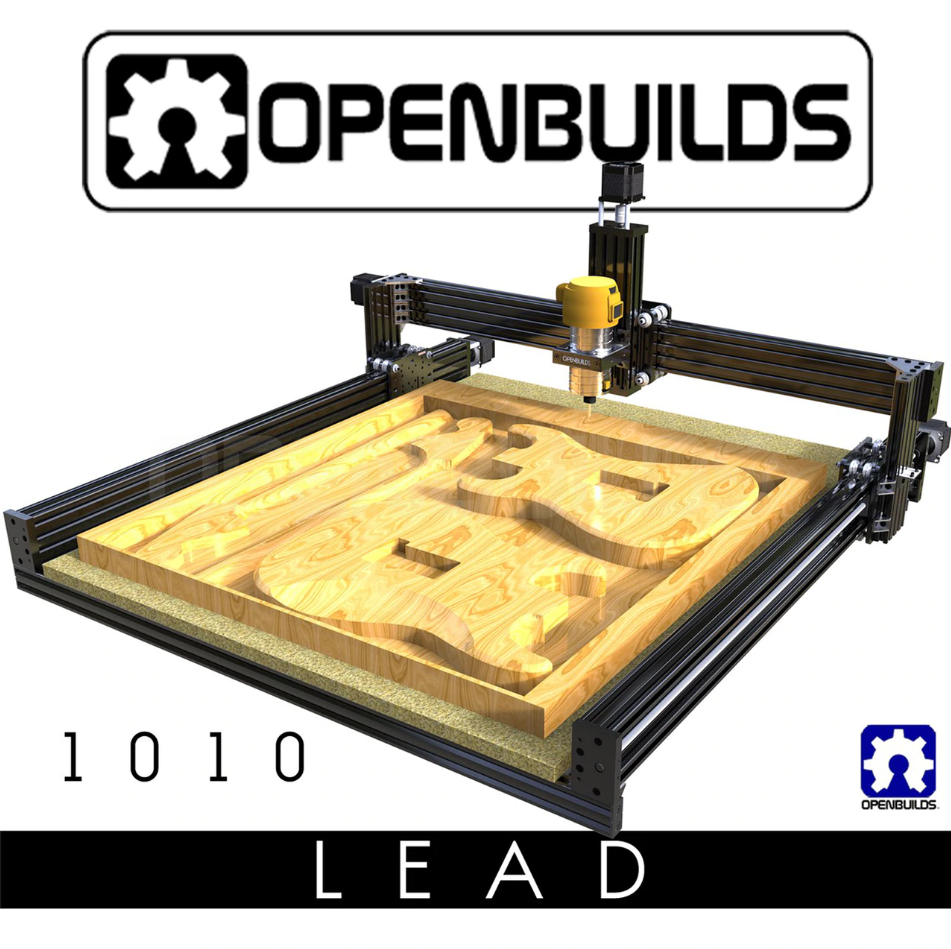
OpenBuilds LEAD 1010 Guide: V-Slot CNC Kit for Builders and Existing Owners
The LEAD 1010 is a documented V-Slot and C-Beam CNC kit with about 730 x 810 mm of XY travel. OpenBuilds announced its wind-down in May 2025, so assess dealer stock, spare parts and support before buying.
Table of Contents
- OpenBuilds: Company & Community
- Specifications & the Work Area Question
- The Kit: What's Included vs. What You Source
- V-Wheel Reality: The Trade
- Spindle Options for LEAD 1010
- Controller Options
- Build & Assembly Reality
- Cutting Capacity & Reality
- Documentation & Community
- Upgrade Path
- LEAD 1010 vs. Similar Machines
- When to Buy LEAD 1010
- When to Skip LEAD 1010
- Verdict
- Shop This Guide
- Related Articles
The LEAD 1010 uses V-Slot and C-Beam aluminum extrusion with leadscrew drives. Its roughly 1000 x 1000 mm footprint provides about 730 x 810 mm of XY travel, not a full meter of cutting space.
When comparing kits, inspect extrusion finish, wheel fit, bearing alignment and the completeness of the assembly documentation. Supplier support and replacement-part availability matter as much as the initial price.
The LEAD 1010 is not cutting-edge technology—V-slot and C-beam have been proven for years. But it's a solid platform. If you want to route wood and acrylic without debugging hardware nonsense, this is worth considering.
OpenBuilds: Company & Community
OpenBuilds developed the LEAD kit and hosted a large library of build logs and assembly information. Its May 2025 wind-down announcement makes this an existing-platform or dealer-stock purchase, with support availability to check separately.
The DIY crowd also gravitates toward OpenBuilds: the design is documented, parts are standard, and the wiki answers most setup questions. It's not as edgy as PrintNC (which optimizes for aluminum rigidity) or as welcoming to entry-level builders as MPCNC (which prioritizes cost). LEAD 1010 sits in the middle: good documentation, solid hardware, reasonable cost, proven results.
Specifications & the Work Area Question
| Aspect | LEAD 1010 | MPCNC Primo (configurable size) | PrintNC V4 (configurable size) |
|---|---|---|---|
| Work Area | 730 x 810 mm | 600×600mm typical | Build-dependent; V4 presets include about 625 x 625 mm and 1275 x 625 mm |
| Frame Material | Aluminum extrusion (V-slot, C-beam) | Steel EMT conduit or specified steel tubing | Steel tube |
| Linear Rails | V-wheels on extrusion | Ball bearings running on steel tube | Profile linear guides, such as HGR20 in the full-size V4 design |
| Drive System | Lead screws (ACME, upgradeable) | Belts on X/Y; leadscrew on Z | Ballscrews |
| Motors | NEMA23 (X, Y, Z) | Five NEMA 17 motors | NEMA23 (all axes) |
| Spindle Included | No | No | No |
| Typical Cost | $750–900 (mechanical only) | $500–700 (mechanical) | $800–1,500 (depends on spindle) |
| Best For | Wood, acrylic, light composites | Entry-level, small work | Aluminum, precision |
| Rigid enough for aluminum | Cautious yes; not recommended | Possible with suitable tooling and setup | Yes |
| Upgrade Path | Custom conversions require a compatible design | Limited (conduit ceiling) | High (more steel, bigger spindle) |
The practical read: LEAD 1010 is adequate for aluminum in light passes, but PrintNC is the better choice if that's your primary material. LEAD excels at wood and acrylic. Cost is between MPCNC and PrintNC.
The Kit: What's Included vs. What You Source
For a LEAD 1010 purchase, check the seller's exact kit contents. OpenBuilds has wound down; remaining dealer kits and used machines may include different electronics and tooling.
- Router or spindle : choose a compatible mount, mains voltage and documented motor/VFD combination
- Controller : select hardware with suitable motor-current ratings and enough drive channels for the machine
- Power supply : match the chosen controller and motor-driver voltage and current requirements
- Wiring & connectors: included in kit or ~$20 sourced separately
- Bits, collets, ER holders: $30–100 depending on your tool collection
The kit itself includes:
- Aluminum extrusion (V-slot, C-beam, pre-drilled)
- Fasteners (massive assortment)
- V-wheel blocks and bearings
- Lead screws (upgradeable later)
- Motor couplings
Confirm whether the offered kit includes motors, controller, power supply, wiring and a router; allow for any missing items before comparing prices.
V-Wheel Reality: The Trade
The gantry carriages ride on V-wheels running in the extrusion grooves. The arrangement is accessible to assemble and adjust, with some practical maintenance needs:
- Wear : inspect wheels for damage, embedded debris and excessive preload
- Dust sensitivity: aluminum particles embed in wheel surfaces, increasing friction
- Adjustment: you need to keep wheels tight; too loose = slop, too tight = binding and drag
Ballscrews change the drive system; profile rails change the guides. Treat either as a custom conversion with its own mounts and alignment work, not as a single inexpensive cure for wheel wear.
Spindle Options for LEAD 1010
- Makita RT0701C: $95–120, proven standard, good integration, adequate power
- VFD spindle : select a model whose mass, clamp diameter, collet and electrical requirements suit the Z axis; water cooling adds a pump and plumbing
- Dremels: technically possible, barely adequate, skip this
- Other trim routers : check spindle-body diameter, collets, local voltage and replacement-part support
A compatible trim router keeps installation simple. A VFD spindle can offer different collet and speed-control options, but check its weight, mount, cooling and wiring before ordering.
Controller Options
OpenBuilds BlackBox:
- BlackBox X32 uses grblHAL; distinguish it from the older BlackBox generation when choosing documentation
- Genuine OpenBuilds hardware
- Excellent integration with OpenBuilds ecosystem
- Check remaining stock, generation, included accessories and current price
Third-party controllers: check firmware support, motor drivers and spindle interfaces
- Cheaper ($50–100)
- Require more troubleshooting
- Community support is broader but less specific to LEAD
Choose a controller with documented compatibility and adequate motor-current capability. For BlackBox, verify the exact generation, remaining stock and seller support before budgeting it into a new build.
Build & Assembly Reality
The LEAD 1010 kit is not assembled. You're bolting aluminum extrusions together, installing bearings, threading lead screws, and wiring electronics. The good news: it's not complicated, and the process is well-documented.
Allow time for mechanical assembly, wiring, squaring and test cuts. The documented sequence helps, but build time depends on experience and the electronics package.
Cutting Capacity & Reality
A properly tuned LEAD 1010:
- Wood (softwood, hardwood) : suitable with tool-specific feeds, speeds and depth per pass
- Acrylic (clear, colored): excellent, edge quality is good
- Plywood: yes, watch for tearout on top ply
- Aluminum (light passes): yes, but slowly and carefully; not the best choice
- MDF: excellent
- Material clearance: OpenBuilds lists about 47 mm with a 1/2-inch spoilboard; usable cutting depth also depends on tooling
Choose feed from the cutter maker's chip-load guidance, spindle speed and flute count, then set engagement for the machine. Very low feeds can cause rubbing and heat rather than a conservative cut.
Documentation & Community
- OpenBuilds Wiki: excellent, detailed assembly and calibration guides
- Builds.openbuilds.com: real build logs you can follow
- YouTube: several complete LEAD 1010 build series
- Forums and archived build logs : useful references; verify current support availability
The assembly documentation and community build logs are useful references. Check that the instructions match the kit and controller you have.
Upgrade Path
The LEAD 1010 ceiling isn't infinite, but it's solid:
- Ballscrew conversion : check end supports, nut mounts, screw lead and controller settings before budgeting
- Linear-rail conversion : requires compatible mounting surfaces, carriage geometry and alignment; it does not determine leadscrew accuracy
- Spindle upgrade : compare a specific motor, VFD, mount and cooling system
- Firmware/controller : the mechanics can use suitable Grbl, grblHAL or other control hardware
Many builders start with stock LEAD and upgrade over time as budget allows. The frame supports it.
LEAD 1010 vs. Similar Machines
vs. MPCNC : compare the LEAD's fixed travel with your planned Primo dimensions, complete parts cost and material needs
vs. PrintNC : PrintNC uses steel structure and profile guides, but its work area is configurable. Compare the chosen build with the LEAD's 730 x 810 mm travel.
vs. LowRider: LowRider is 4×8 sheets; LEAD is fixed-frame. Different use cases.
When to Buy LEAD 1010
- You want a proven, documented platform: it's real and it works
- Work area of about 730 x 810 mm fits your needs : allow space for the larger footprint
- Wood and acrylic are primary materials: where it excels
- You prefer quality hardware over lowest cost: willing to spend $800–1,200 total for solid equipment
- You are comfortable with custom modifications : verify each conversion before buying parts
When to Skip LEAD 1010
- You need aluminum rigidity: PrintNC is better
- You need the absolute lowest cost: MPCNC is cheaper
- You need 4×8 sheet capability: LowRider
- You want cutting-edge technology: LEAD is proven, not innovative
Verdict
The LEAD 1010 remains a documented V-wheel and leadscrew platform for wood and plastic work. OpenBuilds has wound down, so judge any remaining kit or used machine on condition, completeness and the seller's support.
Consider a LEAD 1010 if its working area, assembly process and parts availability suit you. Compare its complete delivered cost with current machines and with a fully costed MPCNC or PrintNC build.
Shop This Guide
| Component | Source | Notes |
|---|---|---|
| LEAD 1010 Kit | OpenBuilds Store → | Direct purchase, excellent; no affiliate available |
| Makita RT0701C Spindle | Amazon → | Community standard, proven integration |
| OpenBuilds BlackBox | OpenBuilds Store → | GRBL controller, excellent integration |
| Compatible NEMA23 Motors | Amazon: StepperOnline NEMA23 → | For future upgrades; stock kit often includes adequate motors |
| Ballscrew Upgrade Kit | Vevor → | Search "LEAD 1010 ballscrew upgrade" for compatibility |
| 24V 10A Power Supply | Amazon → | Standard for spindle and motor power |
| End Mills & Bits | Amazon: CNC router bits assortment → | Start with hardwood and acrylic sets |
Parts for this guide
If you are buying after reading this, these are the specs to look for.
| Part | What to buy | Where to look |
|---|---|---|
| LEAD drive nut An existing LEAD owner taking up leadscrew wear needs a nut matched to the machine's screw and mounting pattern. | 8 mm trapezoidal leadscrew anti-backlash nut block, four-start 2 mm pitch and 8 mm lead, with the OpenBuilds-compatible mounting pattern; confirm against the installed screw. | |
| Replacement solid V wheels A buyer restoring a used LEAD needs compatible wheels when inspection reveals wear or damage. | OpenBuilds-compatible solid V wheel, approximately 23.9 mm OD and 10.2 mm width, using 625 bearings; verify the kit drawing and wheel profile. | |
| 65 mm router mount A mechanical-kit buyer needs a secure mount for the selected trim router. | Rigid 65 mm split clamp with mounting holes or adapter matching the LEAD Z plate; confirm router body diameter first. | |
| Dial indicator A kit builder needs to check squareness, spindle tram and backlash during commissioning. | 0.01 mm graduations with a rigid stand or spindle tramming attachment. |
"Search" buttons open a search for that exact spec, so compare listings against it before buying. Some links earn us a commission at no extra cost to you (disclosure).