Ballscrew Force Calculator — convert motor torque to linear driving force, or find the torque required for a target axial force. Supports ballscrew, rolled screw, ACME/trapezoidal screw, and custom efficiency values.
Undersizing your motor means stalling under cutting loads; oversizing wastes money and adds weight. This calculator uses the real efficiency of your screw type — ballscrews are ~90% efficient while ACME screws are only ~35%, a massive difference in required torque.
Essential for CNC builders selecting stepper or servo motors, and for engineers designing linear actuators and presses.
Quick Formula
Calculation Mode
Motor Torque
Screw Parameters
Results
How to Calculate Ballscrew Force
- Determine your motor torque. For stepper motors, use the torque at your operating speed (not holding torque). For servos, use the continuous torque rating.
- Convert to N·m if needed: 1 oz·in = 0.00706 N·m, 1 kg·cm = 0.0981 N·m.
- Subtract preload drag: If your ballscrew nut has preload, the drag torque (typically 0.05-0.3 N·m) must be subtracted from available torque.
- Apply the formula: Force (N) = 2π × Torque (N·m) × Efficiency / Lead (m).
- Check back-drive: Screws with efficiency above 50% will back-drive (the load can push the motor). This matters for vertical axes — you may need a brake.
Worked Example
NEMA 23 stepper at 1.0 N·m, ballscrew with 5 mm lead, 90% efficiency, 0.1 N·m preload:
Effective torque = 1.0 - 0.1 = 0.9 N·m
Force = 2π × 0.9 × 0.90 / 0.005 = 1,017 N (103.7 kgf)
That is over 100 kg of driving force — plenty for a CNC router or mill conversion.
Common Mistakes
- Using stepper holding torque — at speed, a stepper may deliver only 30-50% of holding torque.
- Ignoring preload drag — on a preloaded C3 nut, drag can eat 10-20% of a small motor’s torque.
- Using ballscrew efficiency for an ACME screw — ACME is ~35% efficient, not 90%. You need 2.5x more motor torque.
- Forgetting back-drive on vertical axes — ballscrews WILL back-drive; add a brake or counterbalance.
Frequently Asked Questions
What is the difference between ballscrew and ACME screw efficiency?
Ballscrews use recirculating balls and are typically 85-95% efficient. ACME (trapezoidal) screws use sliding friction and are only 25-45% efficient. This means an ACME screw needs 2-3x more motor torque for the same force, but it is self-locking (useful for vertical axes).
How much force do I need for CNC milling?
Cutting forces depend on material, tool, and depth of cut. For hobby CNC routers in aluminium, expect 50-200 N of cutting force. For steel milling, 200-1000 N is common. Add acceleration forces (mass x acceleration) to the cutting force for total required force.
Can a stepper motor handle the force required?
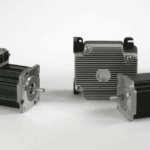
A NEMA 23 stepper at 2 N-m with a 5mm ballscrew produces about 2,260 N — more than enough for most hobby and light production work. The limitation is usually speed (torque drops dramatically above 500 RPM) rather than force.
What is preload drag torque?
Preloaded ballscrew nuts have internal spring pressure that eliminates backlash but creates constant friction. This drag torque (typically 0.05-0.3 N-m) must be overcome before any useful force is produced. It is specified in the ballscrew manufacturer datasheet.
Will my ballscrew back-drive?
Any screw with efficiency above 50% will back-drive — the load can push the screw and spin the motor. All ballscrews back-drive. ACME screws with efficiency below 50% are self-locking. For vertical axes with ballscrews, you need a brake or counterbalance system.